

Understanding Loot Boxes: Are They Fair?
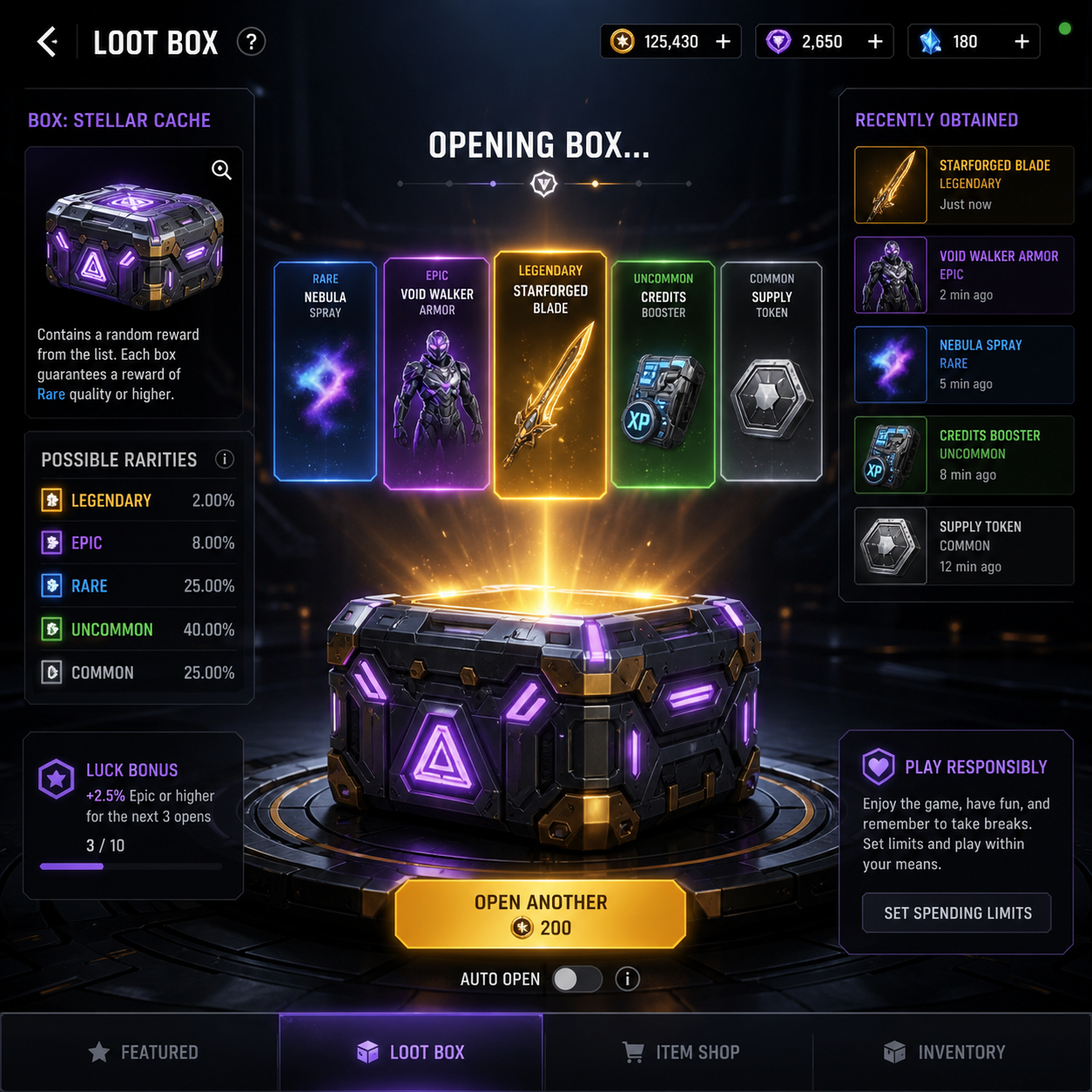
Loot boxes are digital containers that provide randomized rewards in video games. Players usually buy them with real money, in-game currency, or earned tokens, then open them to receive items such as character skins, weapons, emotes, cards, or progression materials.
The fairness question has several layers. A loot box may be fair in terms of published odds while still feeling poor value financially. It may also be harmless cosmetic customization in one game but create a pay-to-win advantage in another. The answer depends on transparency, pricing, reward design, player choice, and protection against overspending.
What Are Loot Boxes and How Do They Work?
Loot boxes are in-game purchases that award randomized digital items according to preset drop rates and probability rules. A player pays or uses an earned currency, opens the box, and receives a reward selected by the game system.
The process usually follows four steps:
- Acquisition: The player buys a box directly, purchases virtual currency, or earns one through gameplay.
- Opening: The player activates the box, often with an animation designed to build suspense.
- Random selection: The game chooses an item from one or more reward categories using its programmed probabilities.
- Collection or use: The reward becomes part of the player’s inventory and may be equipped, traded, converted, or discarded.
Rewards can be cosmetic, functional, or linked to progression. Some systems use rarity tiers such as common, rare, epic, and legendary. Others provide several items at once, with separate odds for each category.
Drop rates are central to understanding the purchase. If a game publishes a 1% chance for a particular item, that does not mean the item will appear after exactly 100 attempts. Each opening is generally an independent event unless the game includes a pity system, guaranteed reward, or increasing chance mechanism. Players should also check whether duplicate protection applies and whether unwanted items can be exchanged for useful value.
Why Do Games Use Loot Boxes?
Games use loot boxes primarily to generate revenue while extending engagement through customization, collection, and progression systems. They are one model within the wider business of video game monetization and microtransactions.
For publishers, loot boxes can support free-to-play games that do not charge an upfront purchase price. Revenue from in-game purchases may fund servers, updates, new content, customer support, and ongoing development. The model also lets a small share of highly engaged players finance access for a larger player base.
For players, randomized rewards can add excitement and variety. A box may offer a quick way to obtain visual themes, character animations, collectible cards, or equipment. Collection systems can give players long-term goals, especially when items are tied to seasonal events or limited content.
However, the same design features that encourage engagement can increase commercial pressure. Limited-time boxes, countdowns, event-exclusive rewards, and prominent opening animations can make a purchase feel urgent. A player may begin with a cosmetic goal and then continue buying after receiving duplicates or low-value items.
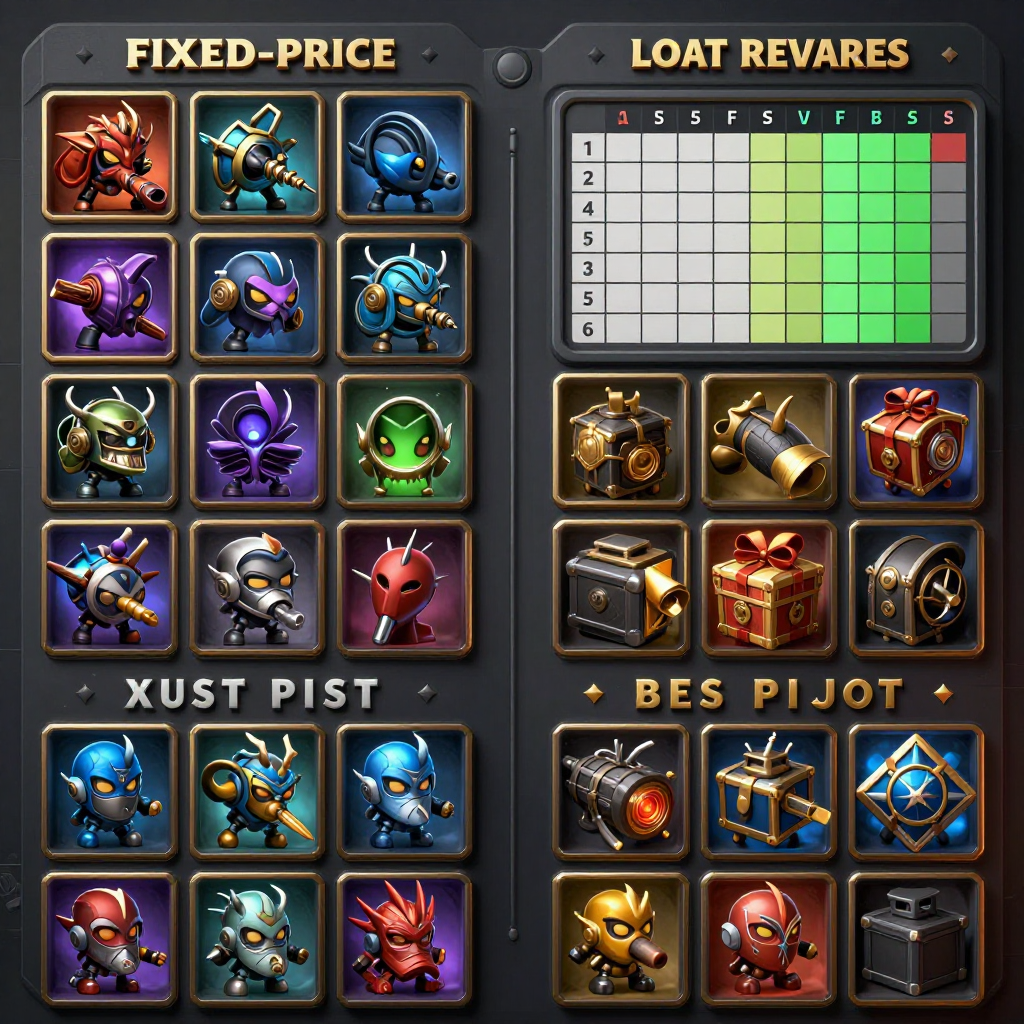
That creates a basic trade-off: randomized rewards can help fund accessible games, but uncertainty can also make the cost of obtaining a desired item difficult to predict. A fixed-price shop gives players clearer control over value. A loot box shifts more of that control toward chance.
What Makes a Loot Box Fair or Unfair?
A loot box is more likely to be fair when it clearly explains the odds, offers reasonable value, keeps rewards optional, and avoids giving paying players an excessive gameplay advantage. Fairness requires examining both the rules of the system and the experience created around those rules.
Transparency and meaningful probabilities
Players should be able to find current drop rates before purchasing or opening a box. Vague labels such as “high chance” or “premium reward” are less useful than specific percentages. A transparent system also explains whether odds differ by platform, event, region, box type, or account status.
Published probabilities should be meaningful rather than technically accurate but difficult to interpret. For example, players need to know whether a 5% chance applies to any item in a rarity group or to one specific reward. Information about pity timers, duplicate protection, guaranteed rewards, and item pools matters just as much.
Value, gameplay impact, and choice
Cosmetic rewards usually create fewer fairness concerns because they change appearance without affecting competitive performance. By contrast, boxes containing powerful weapons, characters, upgrades, or scarce progression resources can create a pay-to-win environment.
Price also matters. A box costing a small amount may still become expensive when the desired reward has a very low probability. Players should compare the uncertain cost of a loot box with the fixed price of a direct-purchase alternative.
A strong fairness test is the choice-control-value framework:
- Choice: Can players buy the exact item directly or earn it through normal play?
- Control: Are spending limits, purchase confirmations, and clear currency prices available?
- Value: Does each purchase provide a reasonable chance of useful content without excessive duplicates?
If all three areas are weak, the system may be legal or technically disclosed yet still feel exploitative. Fairness is broader than compliance.
Loot Boxes and Gambling: What Is the Connection?
Loot boxes resemble gambling because players spend something of value for an uncertain outcome, but they are not automatically identical to regulated online casino games. Their legal classification depends on local law, the game’s design, and whether rewards have monetary or transferable value.
The overlap comes from the structure: payment, chance, and a variable reward. Suspenseful animations, near-miss effects, rarity sounds, and repeated attempts can also resemble gambling mechanics. These features may encourage players to focus on the excitement of opening rather than the practical value of the item.
There are important differences. Online casino games generally offer outcomes designed as wagers, while loot boxes may award items with no cash-out option. Some games allow trading or resale, which can make rewards more economically significant. Others provide boxes through gameplay and restrict transfers entirely.
Regulation varies by jurisdiction and can change as policymakers respond to new game designs. Players should avoid assuming that a loot box is either definitely gambling or definitely outside gambling rules. The UK Gambling Commission and relevant consumer-protection authorities provide examples of how chance-based gaming products may be assessed, but local guidance remains decisive.
For personal decision-making, the label matters less than the risk pattern. If a purchase uses real money, relies on uncertain rewards, and encourages repeated attempts, players should approach it with the same caution used for other chance-based entertainment.
Key Risks for Players
The main risks of loot boxes are unpredictable spending, low-value or duplicate rewards, purchase pressure, and greater vulnerability among younger or financially at-risk players.
Unpredictable costs
A fixed-price item has a known maximum cost. A randomized reward does not, unless the game includes a clearly stated guarantee. Players can spend far beyond their original budget while chasing one item, especially when each unsuccessful opening feels like progress toward the next attempt.
Duplicates and poor value
Duplicate rewards may provide little benefit, particularly when players cannot trade, convert, or refuse them. A box can therefore have a high advertised value while offering limited practical value to a particular account.
Pressure and vulnerable players
Limited-time events, social comparison, daily rewards, and flashy opening sequences can encourage impulse purchases. Younger players may also struggle to understand virtual currency prices or probability. Parents and guardians should review account settings, payment permissions, and platform controls rather than relying only on a child’s judgment at the moment of purchase.
Common mistakes include treating a rare outcome as “due,” buying more after an unlucky streak, and confusing a virtual currency bundle with a cheap purchase. Random events do not remember previous results unless the game explicitly uses a pity or guarantee system. A useful correction is to decide the maximum spend before opening anything and stop when that limit is reached.
How to Use Loot Boxes More Responsibly
To use loot boxes more responsibly, check the odds, set a firm entertainment budget, avoid pressure-driven purchases, and compare random rewards with direct-purchase alternatives. These steps reduce uncertainty without requiring players to avoid every game that includes loot boxes.
- Read the reward rules first. Check drop rates, item pools, duplicate policies, pity systems, expiry dates, and whether rewards affect gameplay.
- Set a spending limit. Use a weekly or monthly amount that fits within your entertainment budget. Treat it as spent when the purchase is made, not as money that might be recovered through a valuable reward.
- Convert virtual currency into real cost. Write down how much each box costs in your local currency, especially when bundles obscure the per-box price.
- Wait before buying. A delay of 24 hours can separate a considered purchase from a response to a countdown, promotion, or frustrating match.
- Prefer certainty when the goal is specific. If a direct shop offers the desired skin or character for a known price, compare that option with the likely cost of repeated randomized attempts.
- Use player protection tools. Enable platform spending limits, parental controls, purchase confirmations, bank alerts, and account-level restrictions where available.
Responsible spending also means recognizing emotional signals. If you feel compelled to continue after losses, hide purchases from someone, or rely on a rare reward to justify previous spending, stop and take a break. Players who cannot control gambling-like spending may benefit from contacting a local support service or a licensed gambling-help organization.
Final Verdict: Are Loot Boxes Fair?
Loot boxes are fairer when they provide transparent odds, reasonable pricing, optional rewards, meaningful alternatives, and strong player-protection measures. They become less fair when chance hides the true cost, rewards affect competitive power, or design pressure encourages repeated spending.
There is no single verdict for every game. A cosmetic box with published probabilities, duplicate protection, an earnable path, and a direct-purchase option presents a different risk profile from a box containing essential upgrades and extremely rare competitive items.
The most useful question is not simply whether loot boxes are fair. Ask: Can I understand the odds, control my spending, and enjoy the game without buying them? If the answer is yes, the system offers meaningful player choice. If the answer is no, caution is justified, even when the game displays its probabilities clearly.
Loot Box FAQ
Are loot boxes considered gambling?
Some loot boxes share gambling-like characteristics, but their legal classification varies by jurisdiction, reward type, transferability, and game design. A loot box is not automatically treated the same as a regulated online casino game.
Do all loot boxes publish their odds?
No. Requirements and practices differ between games and locations. Players should look for specific drop rates, reward pools, duplicate rules, and guarantee mechanics before purchasing.
Why can loot boxes lead to overspending?
Uncertain rewards, limited-time offers, virtual currencies, repeated attempts, and emotional reactions to losing can make total spending difficult to track. A fixed budget and purchase delay can reduce this risk.
Are loot boxes pay-to-win?
Some are, while others contain cosmetic items only. Loot boxes are more likely to be pay-to-win when they provide stronger equipment, competitive upgrades, or essential progression that players can obtain faster through payment.
How can players set safer spending limits?
Choose a specific weekly or monthly amount, convert virtual currency into real-world cost, enable account or platform limits, and stop when the budget is used. Never increase the limit to chase a particular reward.